



2026 Jeep Wrangler vs Ford Bronco
vs. Standard Willys

In the world of off-road SUVs, there are only two real contenders: the Jeep Wrangler and the Ford Bronco. For drivers in Kingfisher, OK, this isn't just a question of style; it's a question of utility. Which vehicle can actually handle the red dirt ranch roads, tow the utility trailer, and survive years of heavy use without expensive suspension repairs?
While the Bronco is a capable vehicle, the 2026 Jeep Wrangler retains critical engineering advantages, specifically its solid front axle and superior towing capacity-that make it the better tool for Oklahoma life.
The Engineering Divide: Solid Axle vs. IFS
The single biggest difference between these two vehicles is the front suspension.
- Ford Bronco: Uses Independent Front Suspension (IFS). This is the same setup found on most passenger cars and light trucks. It offers a smooth ride on pavement but has many moving parts (CV joints, boots) that are vulnerable to tearing in heavy brush or mud.
- Jeep Wrangler: Uses a Solid Front Axle. This is a solid beam of steel connecting the wheels.
Why It Matters in Kingfisher:
When you are driving over rutted pasture land or rocky creek beds, a solid axle forces the tires to work together. If the left tire is pushed up by a rock, the right tire is forced down for traction. This "forced articulation" provides mechanical grip that an IFS system simply cannot match. Furthermore, a solid axle has fewer fragile rubber boots to tear on mesquite brush, meaning less downtime in the shop.
Powertrain: The Replacement for Displacement
Powertrain: The Replacement for Displacement
Ford has bet entirely on turbocharged engines (EcoBoost). Jeep believes you should have a choice.
- Ford Bronco: Offers a 2.3L Turbo 4-cylinder or a 2.7L Turbo V6. No V8 option is available (outside of the $90k+ Raptor).
- Jeep Wrangler: Offers the proven 3.6L Pentastar V6, a 2.0L Turbo, and the 6.4L HEMI® V8 (available in the Willys 392 and Moab 392).
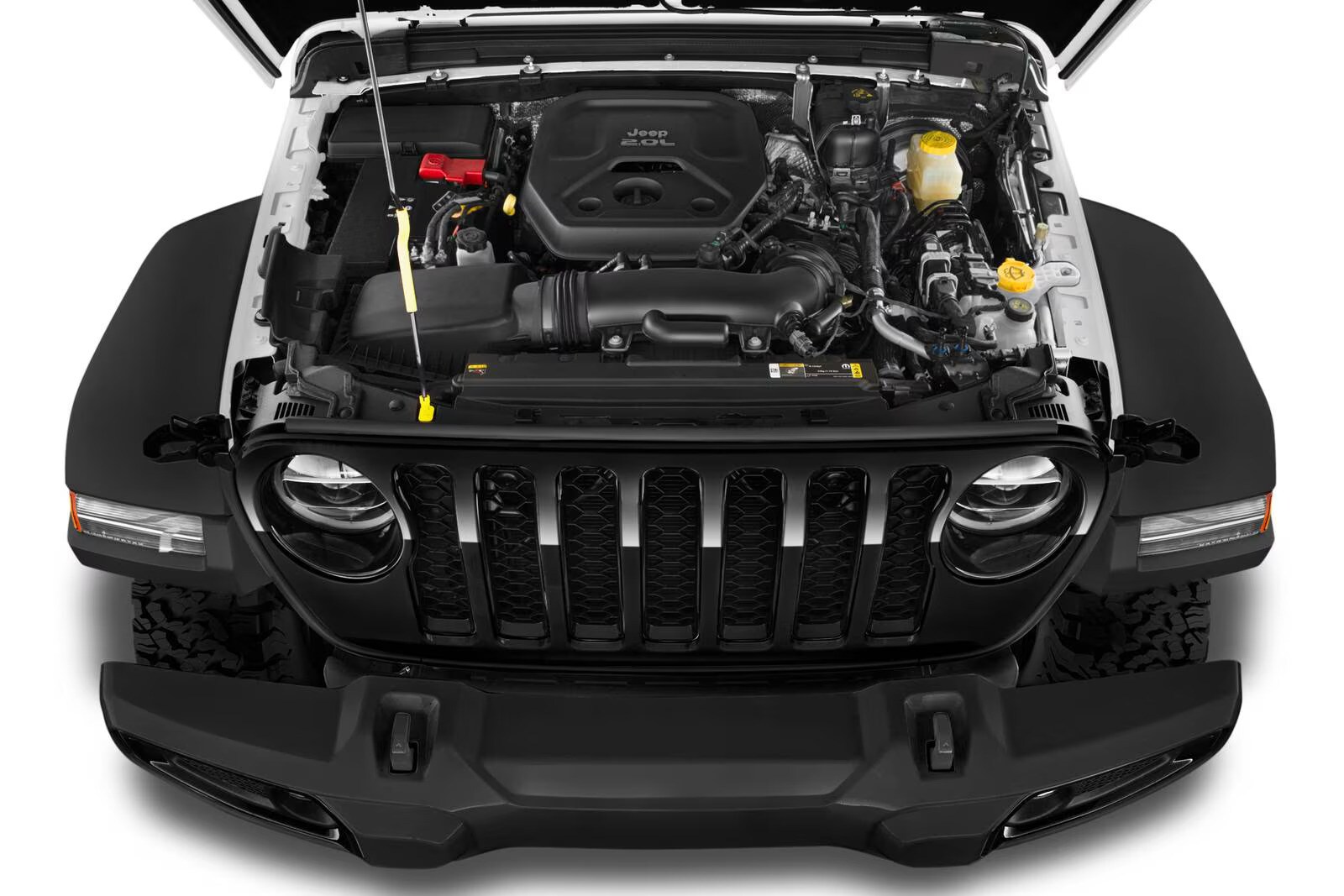
For towing and highway merging, the linear power delivery of the Jeep's naturally aspirated V6 or the raw grunt of the V8 provides a reliability factor that many Kingfisher buyers trust over complex twin-turbo systems.
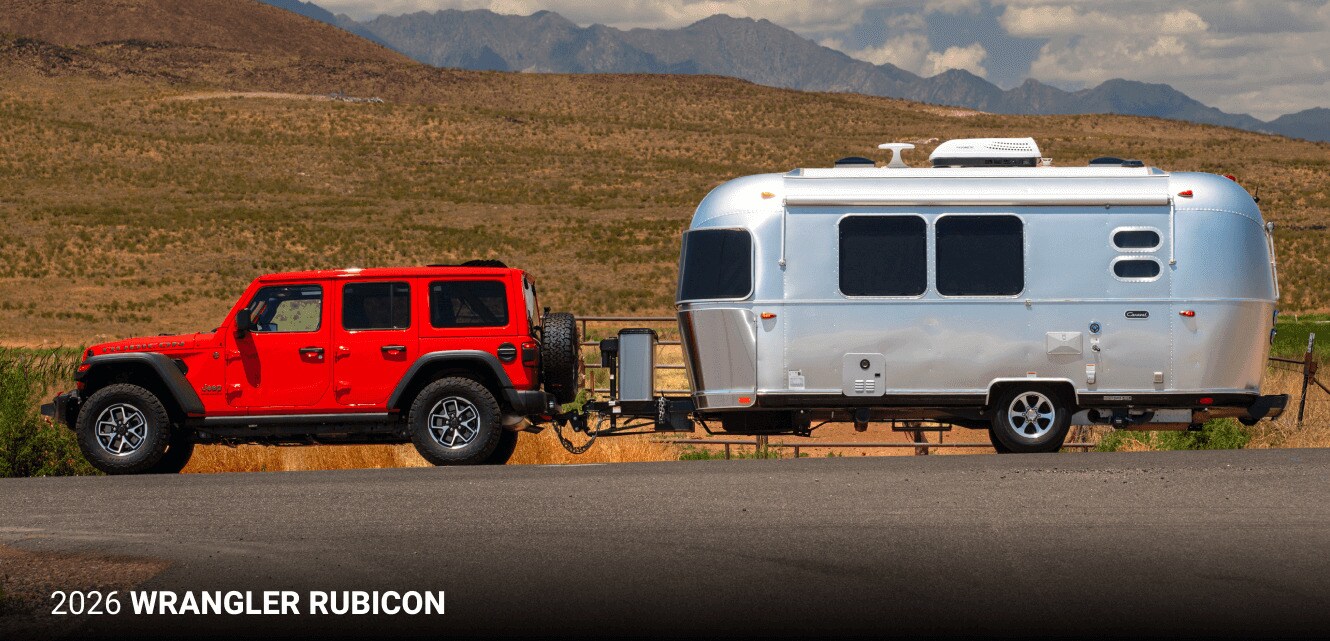
Towing Capacity: Do More Work
For 2026, the Jeep Wrangler (4-door Rubicon models) offers a best-in-class maximum towing capacity of 5,000 lbs.
- Jeep Wrangler (4-door): Up to 5,000 lbs.
- Ford Bronco (4-door): Maxes out at 3,500 lbs (standard trims).
The Real World Difference:
That extra 1,500 lbs is the difference between towing a small fishing boat and towing a loaded utility trailer with a side-by-side or a compact tractor. If you need your SUV to double as a work truck, the Wrangler is the only one legally rated for the job.
Off-Road Technical Specs
| Feature | 2026 Jeep Wrangler (Rubicon) | 2026 Ford Bronco (Badlands) | Advantage |
|---|---|---|---|
| Front Suspension | Solid Axle (Dana 44) | Independent (IFS) | Jeep (Durability) |
| Crawl Ratio | Up to 100:1 | ~67:1 (Automatic) | Jeep (Control) |
| Max Towing | 5,000 lbs | 3,500 lbs | Jeep (Utility) |
| V8 Availability | Yes (6.4L HEMI) | No | Jeep (Power) |
| Open Air | Fold-Down Windshield | Fixed Windshield | Jeep (Experience) |
The Verdict for Oklahoma
The Ford Bronco is a great "lifestyle" vehicle. It looks good at the mall and handles well on the highway. But the 2026 Jeep Wrangler is built like a tool. Its solid axles are designed to take a beating, its engines are proven, and its towing capacity allows it to work for a living.
For the driver who views their vehicle as reliable equipment rather than just transportation, the choice remains clear.
* The advertised price does not include sales tax, vehicle registration fees, other fees required by law, finance charges and any documentation charges. A negotiable administration fee, up to $115, may be added to the price of the vehicle.
* Images, prices, and options shown, including vehicle color, trim, options, pricing and other specifications are subject to availability, incentive offerings, current pricing and credit worthiness.
* Price does not include $89 doc fee.